This Aruba snorkeling FAQ answers the questions visitors ask most before they get in the water: where to go, when to go, what you will see, what is safe and what the rules are. Every answer starts with the short version, then links to the full guide or spot page if you want the detail. […]
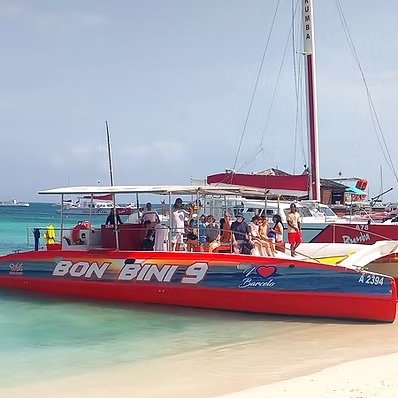
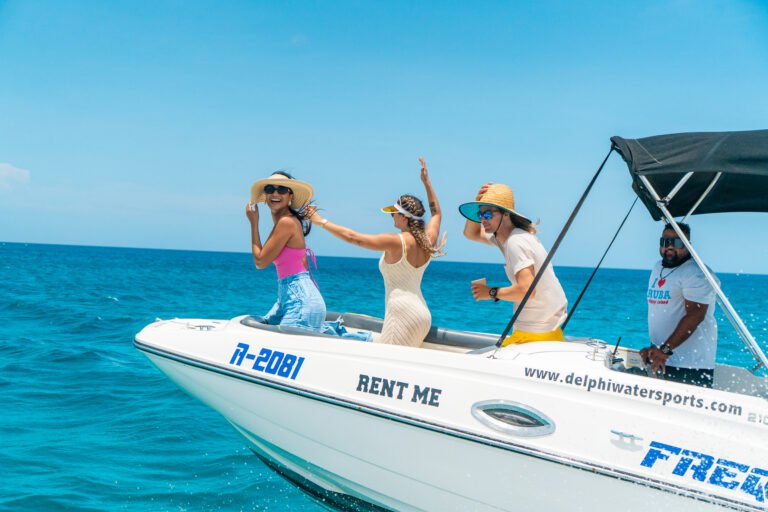
Turtle snorkels, catamarans, private boats, sunset sails and island tours. Book in the pop-up, or open the full tour page.
Malmok · 2-hour guided snorkel · look for sea turtles · gear included
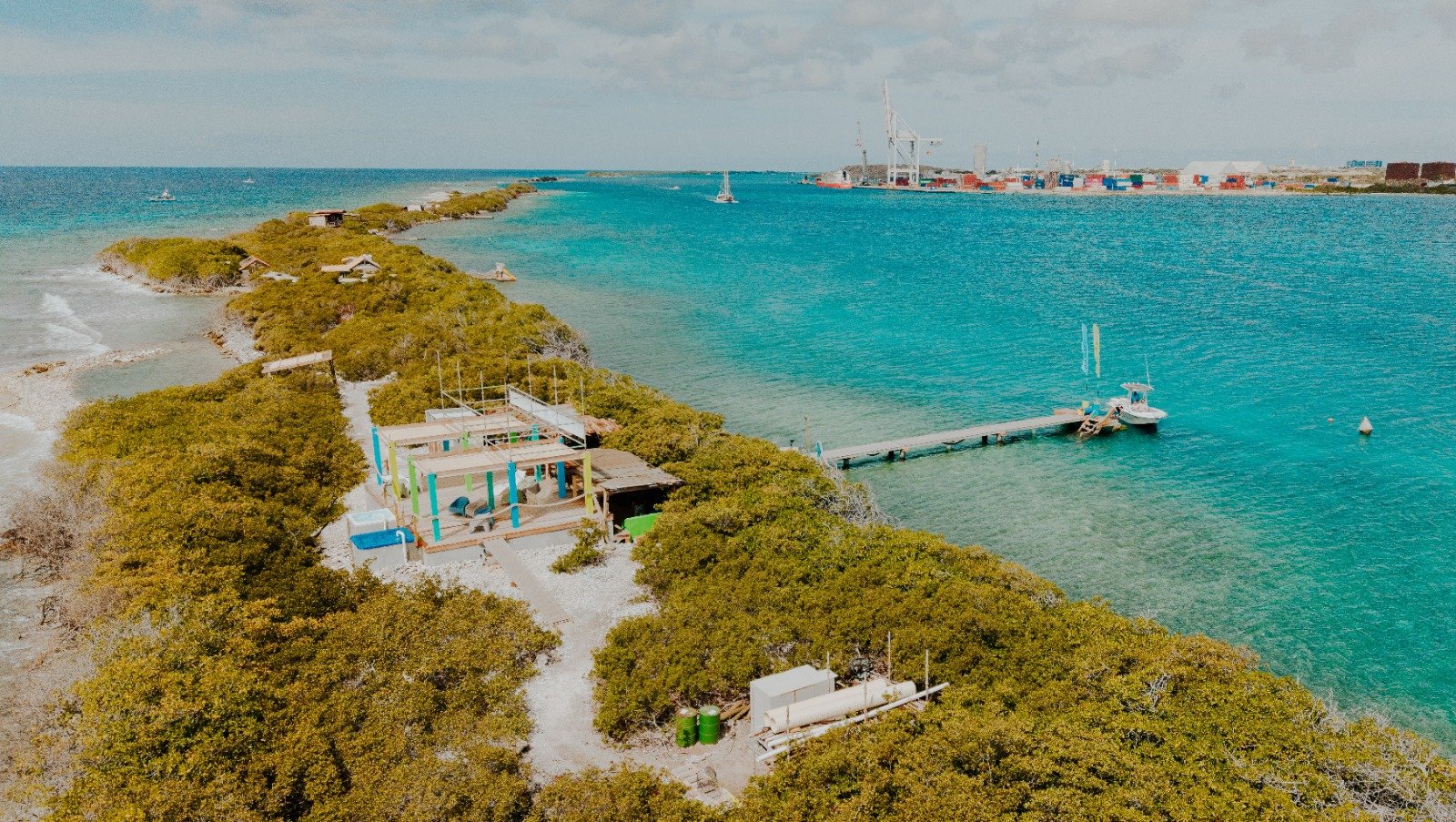
7 hours, private · $1,250 for 5, +$200 a guest to 12 · lunch, snorkel gear & Salty Water Jacuzzi
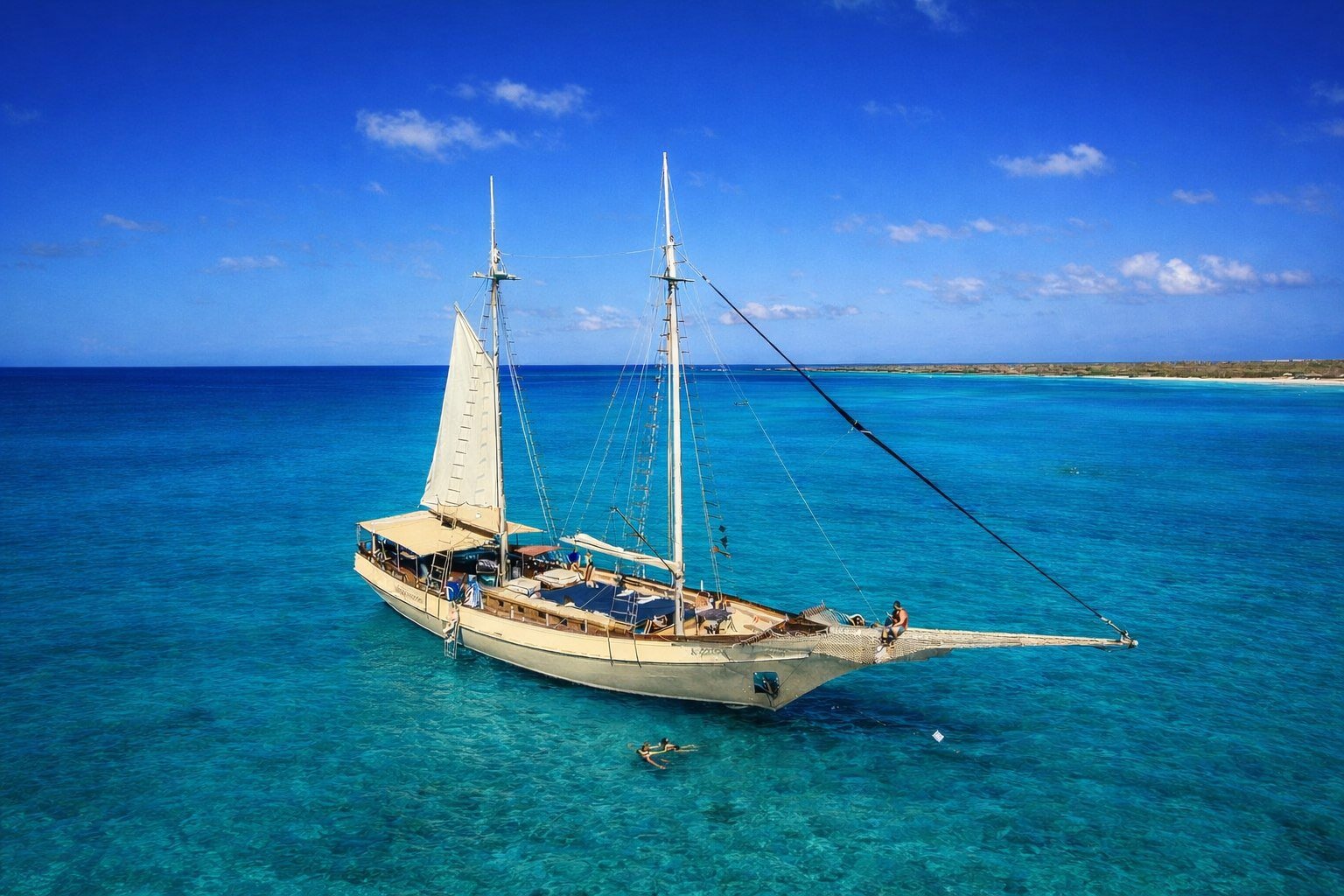
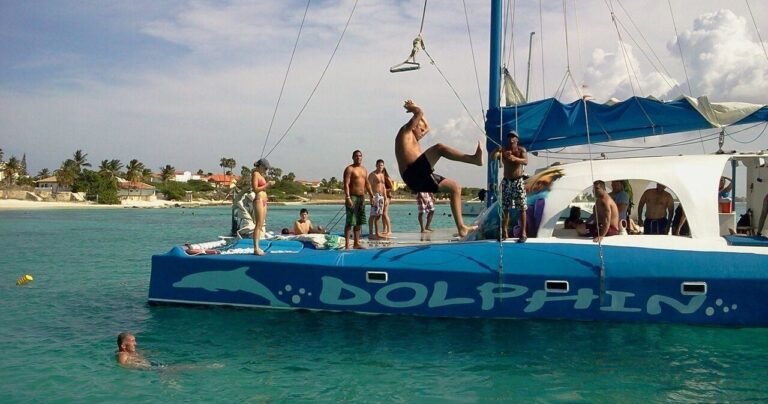
A 110-foot schooner out of Palm Beach: the calm 10:15 AM sail to Boca Catalina and Malmok, or the 3:15 PM party sail with the Antilla wreck, rope swing and open bar.
3 hours · wreck & reef · open bar, lunch
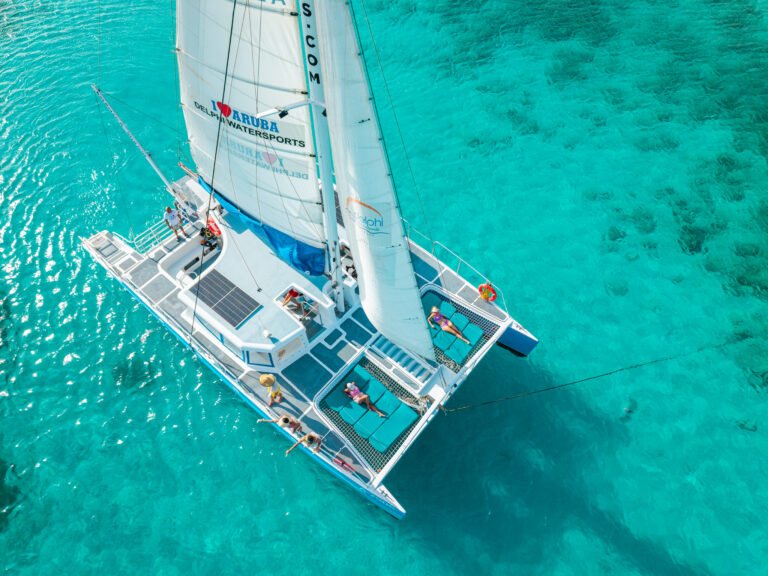
Three hours off Palm Beach — morning, afternoon or sunset at $70 an adult and $45 a child, or the whole boat to yourselves for $2,100.
3 to 8 hours · up to 42 · 2 snorkel stops, open bar
1 to 7 hours · up to 6 · snorkel from 2 hours
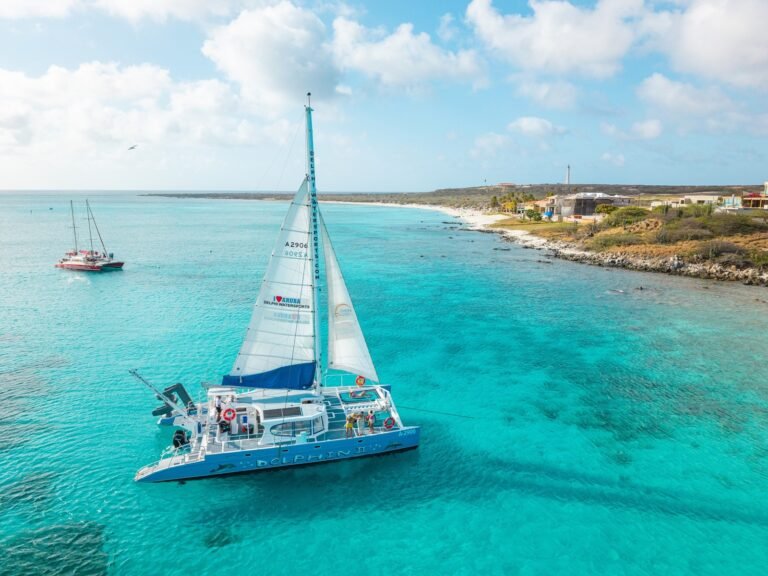
3 hours · whole catamaran · up to 60 people
This Aruba snorkeling FAQ answers the questions visitors ask most before they get in the water: where to go, when to go, what you will see, what is safe and what the rules are. Every answer starts with the short version, then links to the full guide or spot page if you want the detail.
In one line: Aruba is a very good snorkeling island. The water is warm all year, the west and south coasts are sheltered, and at least six good reefs can be reached straight from the beach without a boat.
Yes. Aruba has warm water all year (about 26–29°C / 79–84°F), calm sheltered beaches on its west and south coasts, clear water with 10–30 m of visibility, and shore reefs where green and hawksbill sea turtles, eagle rays and parrotfish are common. It is especially good for beginners because you can walk in from the sand at most spots.
More detail: Is Aruba good for snorkeling?
The six best snorkel spots in Aruba are Mangel Halto, Boca Catalina, Malmok, Arashi Beach, Baby Beach and Tres Trapi. Mangel Halto has the healthiest coral, Boca Catalina is the best for sea turtles, Malmok is best for eagle rays and the Antilla wreck offshore, Arashi has huge sponges, Baby Beach is a calm lagoon for kids, and Tres Trapi is for confident snorkelers who want nurse sharks.
See all six: Aruba snorkel spots and the best snorkeling in Aruba.
Yes. All six of the main snorkel spots can be reached from the shore, so you can drive or take a taxi, park by the road and walk into the water with your own mask and fins. You only need a boat for offshore sites such as the Antilla and Pedernales wrecks.
How to do it: shore snorkeling in Aruba.
Yes, snorkeling from Aruba’s public beaches is free. Beaches in Aruba are public, and spots like Boca Catalina, Malmok, Arashi, Mangel Halto and Baby Beach have free roadside parking or free car parks. You pay only if you rent gear, join a boat tour or visit a private island such as De Palm Island.
Boca Catalina is the easiest all-round shore snorkel in Aruba: a sandy entry, shallow reef close to the beach and a very good chance of sea turtles in the morning. Mangel Halto is the best for coral, and Baby Beach is the safest for children because it is an enclosed lagoon.
Side by side: Arashi Beach vs Boca Catalina and Mangel Halto vs Baby Beach.
Not really. Eagle Beach and most of Palm Beach are long sandy beaches with little reef, so there is not much to see with a mask. For real reef, drive a few minutes north of Palm Beach to Malmok, Boca Catalina or Arashi.
It helps, but you do not have to. Most of the best snorkel spots have no rental stand, so either pack your own mask, snorkel and fins or rent them in the Palm Beach hotel area before you drive to the beach. Boat tours normally include gear.
Where to rent: renting snorkel gear in Aruba and what gear to bring.
Aruba is a year-round snorkeling destination because the water stays around 26–29°C (79–84°F) every month. December to April is usually best for the south and west spots like Mangel Halto and Boca Catalina, while May to October suits the north tip (Arashi, Tres Trapi) when the north swell is gone.
Month by month: the best time to snorkel in Aruba.
Early morning, roughly 7 to 10 AM, is the best time to snorkel in Aruba. The water is calmer and clearer, turtles and rays are more active, and the catamaran groups that stop at Boca Catalina and Malmok usually arrive after 10 AM.
The sea around Aruba is about 26–29°C (79–84°F) all year, a little cooler in January and February and warmest around September and October. Most people snorkel comfortably without a wetsuit.
More: Aruba water temperature.
No. The water is warm enough that a wetsuit is not needed. Many snorkelers wear a long-sleeve rash guard instead, mainly to protect their back from the strong sun while they float face down.
Visibility is usually 10–30 m (about 30–100 ft). Malmok can reach 25–30 m in the dry season, Mangel Halto 15–25 m, Boca Catalina and Arashi 10–20 m, and the Baby Beach lagoon 5–15 m. It is clearest in the morning and on days with less wind.
Yes. Aruba has steady trade winds, which is why the sheltered west and south coasts are where people snorkel. On windy days choose a protected spot such as Mangel Halto or Boca Catalina, and between November and April check the sea at Arashi before going in, because north swell can roll in there.
Rarely. Aruba sits south of the main Atlantic hurricane track, so direct hits are uncommon. Wind and swell on the day matter far more for snorkeling than the hurricane season.
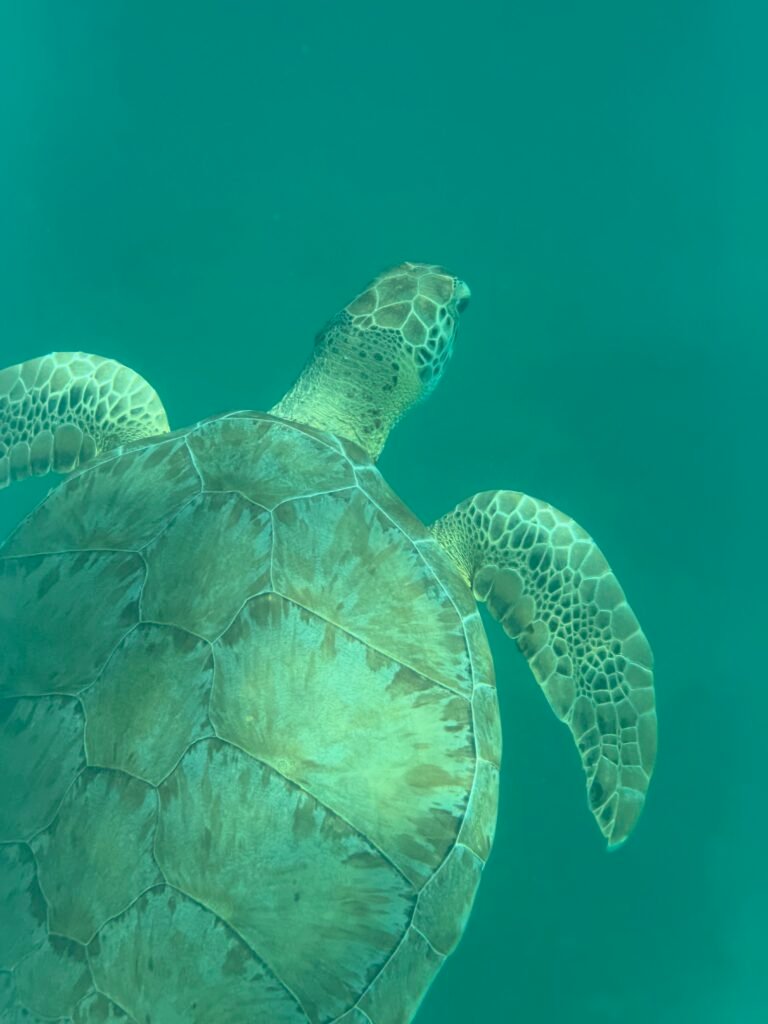
Yes. Green and hawksbill sea turtles are seen regularly by snorkelers in Aruba. Boca Catalina is the best spot, with turtles grazing seagrass in the morning, and Mangel Halto and Arashi Beach are also good. Aruba is home to four sea turtle species: green, hawksbill, loggerhead and leatherback.
Meet them: green sea turtle and hawksbill sea turtle.
No. Sea turtles are protected by law in Aruba and handling or harassing them is illegal. Stay at least 2 meters (about 6 feet) away, never chase, block or feed them, and let them surface to breathe; a stressed turtle struggles to breathe.
Sea turtles nest on Aruba’s beaches from about March to November. Leatherbacks start in March, followed by loggerhead, hawksbill and green turtles, and the last nests hatch around November. If you see a nest or a turtle in trouble, call Turtugaruba’s 24/7 hotline at +297 592 9393.
Yes, but encounters are rare and the sharks snorkelers meet are almost always nurse sharks, which are slow and docile and rest under ledges during the day. The Global Shark Attack File lists only one shark attack in Aruba, in 2015, and it involved a capsized boat, not a swimmer or snorkeler.
About nurse sharks: nurse shark.
Tres Trapi is the best shore spot for nurse sharks, which rest in sandy channels at 3–6 m, and Malmok has them under coral overhangs. Look but do not touch or corner them.
Malmok is the best place in Aruba to see spotted eagle rays from shore, especially at dawn. Boca Catalina, Mangel Halto, Arashi and Tres Trapi also get eagle rays on their outer edges, and southern stingrays rest on the sand at Boca Catalina and Baby Beach.
More: spotted eagle ray and southern stingray.
The most common fish are sergeant majors, parrotfish, blue tangs, French angelfish, yellowtail snapper, wrasse, trumpetfish and hogfish, plus moray eels in crevices. Most of them live in the first few meters, so you see plenty floating on the surface.
The full list: Aruba fish guide for snorkelers.
Jellyfish are not a regular problem on Aruba’s sheltered snorkel beaches, but they do drift in occasionally. If you are stung, get out of the water, rinse the area with seawater rather than fresh water, do not rub it, and see a doctor if you have trouble breathing or a strong reaction.
Do not touch coral or anything on the reef. Fire coral stings, sea urchin spines break off in the skin, and lionfish and scorpionfish have venomous spines. Keep your fins off the bottom, wear water shoes at rocky entries, and look but never touch.
Yes, on the sheltered west and south coasts Aruba is one of the safer places in the Caribbean to snorkel. The main rules are: snorkel only on the leeward (west and south) side, go with a buddy, stay inside sheltered bays and lagoons, and get out if the water starts pushing you sideways.
The full checklist: Aruba snorkeling safety.
No, not from the beach. The windward east and north coast faces the open trade winds, with big waves and strong currents, and is not safe for snorkeling. The one exception visitors know is the Natural Pool (Conchi) inside Arikok National Park, a rock-sheltered pool you swim in only on calm days.
Yes, on calm days. The Natural Pool, or Conchi, is a pool ringed by volcanic rock on the windward coast inside Arikok National Park. You reach it by 4×4, on horseback or on foot over rough terrain, and when the sea is rough waves break over the rocks, so go with a guide or check conditions first.
Most Aruba beaches, including the snorkel spots, have no lifeguards. Snorkel with a buddy, tell someone where you are going, and stay within your ability.
Yes, inside the lagoon. Baby Beach is a shallow, standable lagoon with almost no current, protected by a natural barrier. Never swim out past the barrier, where open-ocean currents are strong.
The spot: Baby Beach snorkeling.
It is a good idea at Malmok and anywhere boats operate. A bright surface marker buoy makes you visible to the dive and tour boats that pass the Malmok reef and the Antilla wreck area.
Yes, with care. The Baby Beach lagoon is shallow enough to stand in most places, and a snorkel vest or flotation belt lets weak swimmers float without effort. On boat tours, tell the crew you cannot swim and ask for a flotation vest before you get in.
Yes. Baby Beach is the best spot for children: a calm, shallow lagoon with a sandy entry, restrooms and room to supervise. Boca Catalina and Arashi Beach also have easy sandy entries for older kids.
Family tips: snorkeling with kids in Aruba.
Yes. Baby Beach, Boca Catalina and Arashi Beach all have sandy entries, shallow water and calm conditions on most days. Avoid Tres Trapi until you are confident, because you enter from concrete steps onto sharp limestone.
Start here: snorkeling for beginners in Aruba.
Yes. Aruba banned the import, sale and production of sunscreens containing oxybenzone, a chemical that damages coral reefs, with penalties starting in July 2020. Bring or buy a mineral, reef-safe sunscreen (zinc oxide or titanium dioxide), or wear a rash guard to cover up.
What to buy: reef-safe sunscreen in Aruba.
Yes. Parke Marino Aruba (Marine Park Aruba) was established in December 2018 and is managed by the Aruba National Park Foundation. It protects four coastal zones covering about 60 km²: the waters off Arikok National Park, the eastern cape at Seroe Colorado, the Mangel Halto, Isla di Oro and Santo Largo area, and the Oranjestad reef islands.
No. Taking seashells, coral, sand dollars, dried sea stars or white sand off the beach is against the law in Aruba and can lead to a fine at the airport. Leave everything where you found it.
No. Do not feed fish, turtles or seabirds. Bread and other human food harms them and can feed the algae that smothers the reef.
No. Standing on coral kills it and can cut you badly. Enter over sand, float over the reef, and if you need a rest, find a sandy patch or float on your back.
Yes, if you want to see the Antilla wreck, visit several reefs in one trip or have gear and guidance taken care of. A boat reaches offshore sites you cannot swim to from the beach. If you only want turtles and coral, the shore spots are free and just as good.
The honest comparison: are snorkeling tours worth it? · Browse: snorkeling tours in Aruba.
Yes, from a boat. The Antilla is a 122 m German cargo ship scuttled off Malmok on 10 May 1940, one of the largest wrecks in the Caribbean. It lies in 18–27 m of water, but the top of the superstructure comes within about 4–5 m of the surface, so snorkelers can see it clearly on a calm, clear day. Most catamaran snorkel tours stop there.
The Pedernales was an oil tanker torpedoed by a German submarine in 1942. Its broken remains lie in about 25 feet (8 m) of water off Malmok, shallow enough for snorkelers to see from the surface, and you reach it by boat.
More: Pedernales wreck snorkeling.
It is easy and convenient rather than spectacular. De Palm Island is a private island off the south coast with a paid all-inclusive day pass and snorkeling around the island. The free public reefs like Mangel Halto and Boca Catalina usually have more coral and turtles.
Full review: De Palm Island snorkeling · Renaissance Island snorkeling.
Yes. The leeward snorkel spots are a short taxi ride from the Oranjestad cruise terminal, and many snorkel tours pick up near the port. Always leave a buffer before your all-aboard time.
Plan it: snorkeling in Aruba on a cruise day.
Bring a well-fitting mask, snorkel, fins, reef-safe mineral sunscreen, a rash guard, water shoes for rocky entries, drinking water and a towel. Many shore spots have no shade, no shop and no restrooms, so pack what you need before you leave the hotel.
At rocky entries, yes. Tres Trapi and Malmok have limestone or step entries that are sharp underfoot, and the left side of Mangel Halto is rocky. Sandy entries such as Baby Beach, Boca Catalina and Arashi are fine barefoot.
Yes. Wear contact lenses under a normal mask, or bring a prescription mask from home. Rental stands rarely stock prescription lenses.
Not long. Aruba’s UV index regularly reaches 10 or higher, and at midday fair skin can burn in under 10 minutes, with your back and the backs of your legs most exposed while you float face down. Wear a rash guard, reapply reef-safe sunscreen, and snorkel early in the morning.
For most visitors snorkeling is enough, because Aruba’s turtles, rays and best coral are in shallow water. Diving adds the deeper parts of the Antilla and other wrecks.
Compare: snorkeling vs diving in Aruba.
Facts on this page come from the site’s own spot surveys and these official and expert sources: Aruba Tourism Authority — responsible guest guide, VisitAruba — oxybenzone ban, Turtugaruba — turtle season, Marine Park Aruba and Dutch Shark Society — sharks in Aruba. Conditions change daily, so always check the sea on the day.
Want it all in one place? Read the Aruba snorkeling guide.
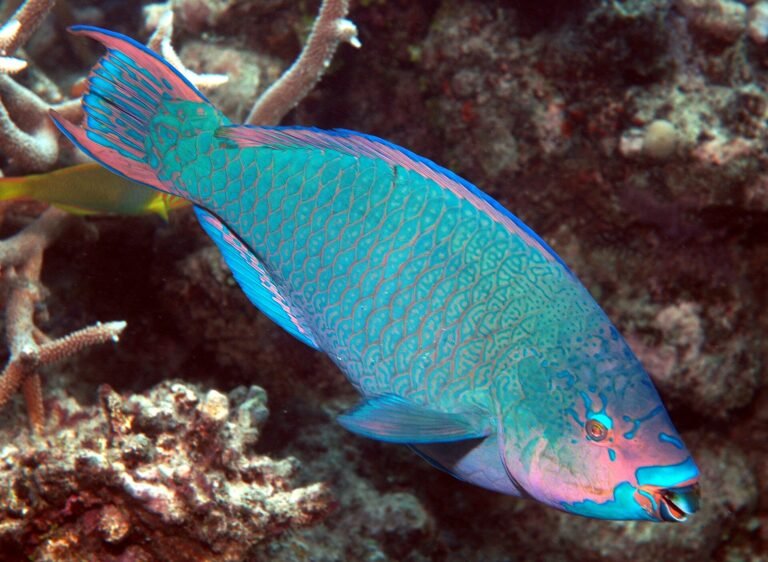
The fish, rays and turtles you are most likely to see snorkeling in Aruba, and the best spot for each.
Read →
Catalina Cove is the small reef just north of Boca Catalina. How to reach it, what lives there and why the edges are best.
Read →The Pedernales is an oil tanker torpedoed off Aruba in 1942. It lies in about 25 feet of water near Malmok. What is left…
Read →Top-rated tours from other Aruba operators, booked on Viator. Pick a type of tour.
★ 4.8 (2,693)
★ 4.5 (2,429)
★ 4.7 (2,248)
★ 4.7 (1,911)
★ 4.7 (1,656)
★ 4.7 (1,626)
★ 4.1 (1,487)
★ 4.6 (1,340)
★ 4.9 (1,281)
Every spot on the island with the honest version: where to park, where to get in, what you will actually see, and the mornings worth setting an alarm for.
 ArubaSnorkel