What to See Snorkeling in Aruba
Aruba's six shore snorkel sites offer some of the most diverse and accessible marine life in the Caribbean. From eagle rays cruising seagrass beds to sea turtles feeding on algae, nurse sharks resting under coral heads and queen angelfish patrolling sponge walls -- here is a complete guide to what you will find and where.
Eagle Rays
Spotted eagle rays (Aetobatus narinari) are the most spectacular wildlife encounter in Aruba. Groups of 2-8 rays visit the seagrass flats at Mangel Halto daily from December through April, cruising at 3-5 metres depth. Malmok above the Antilla wreck also hosts reliable ray sightings November through March. Approach slowly and hold still -- the rays will come within 1-2 metres of quiet snorkelers.
Sea Turtles
Hawksbill and green sea turtles feed on seagrass and algae at Boca Catalina year-round. Arrive before 9 AM for the most reliable sightings before tour boats disturb the area. Turtles are also seen at Baby Beach outer reef (occasional), Mangel Halto (occasional), and Arashi Beach (mainly May-August when hawksbills feed on sponges). Turtles are accustomed to snorkelers and approach closely.
Nurse Sharks
Nurse sharks (Ginglymostoma cirratum) are commonly seen at Tres Trapi resting under coral overhangs in the 6-8 metre sections. Occasionally seen at Baby Beach outer reef. Nurse sharks are docile bottom-dwelling animals that are completely harmless to snorkelers. They are typically 1-2 metres long and rest motionless during the day.
Reef Fish
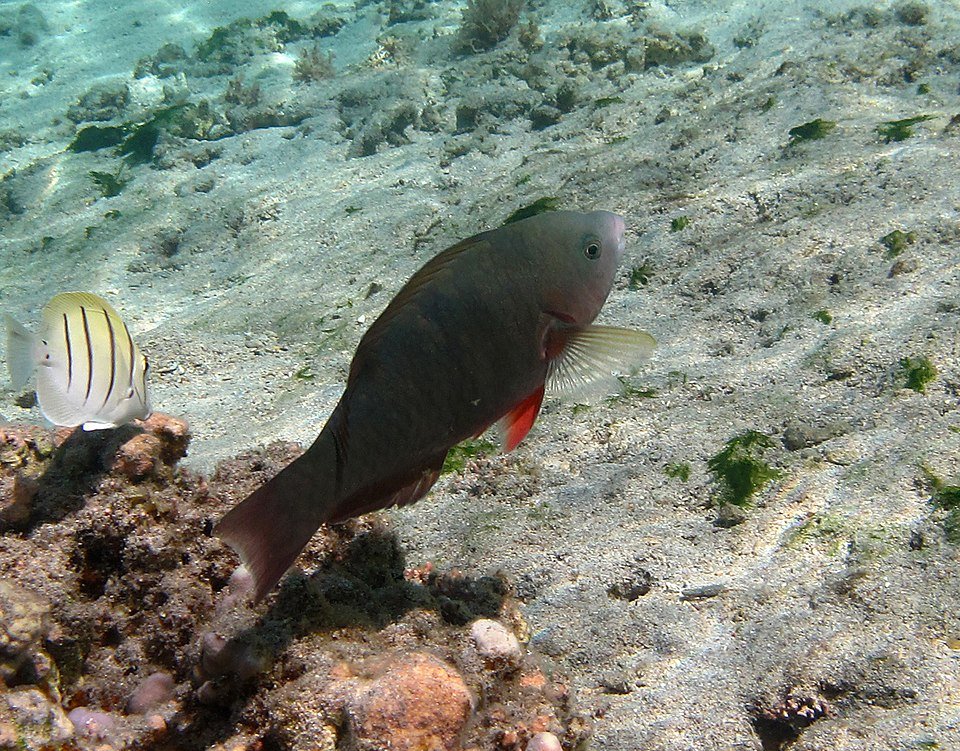
All six sites have abundant reef fish. Queen angelfish and French angelfish at Arashi Beach and Mangel Halto outer reef. Parrotfish at all sites -- large stoplight parrotfish are common at Tres Trapi. Butterflyfish, sergeant majors and blue tangs are abundant at every site. Moray eels peer from every crevice at Tres Trapi and Malmok. Trumpetfish shadow larger fish at all sites. Needlefish patrol the surface everywhere.
Coral and Sponges
Arashi Beach has Aruba's finest sponge reef -- massive orange and purple barrel sponges up to 1.5 metres tall, with azure vase sponges and tube sponges. Brain coral and star coral are found at all sites. Fire coral (yellow-brown) causes painful stings on contact -- recognise and avoid it. The Antilla wreck at Malmok is covered in soft corals, encrusting sponges and sea fans.
The Antilla Wreck
The Antilla is one of the largest shipwrecks in the Caribbean at 122 metres long. Northern sections rise to 5-8 metres and are visible from the surface while snorkeling at Malmok. The wreck is encrusted with corals and sponges and hosts large schools of fish. Full wreck exploration requires scuba -- the deepest sections lie at 18 metres.