Eagle rays patrol Malmok more reliably than anywhere else you can reach from shore - and the Antilla, the Caribbean's largest accessible wreck, lies just offshore.
Photo: EgorovaSvetlana on Wikimedia Commons CC BY-SA 4.0Boat traffic operates in these waters - use a surface marker buoy. The Antilla wreck needs a guided boat tour, not a shore swim.
Malmok Beach snorkeling is the best shore dive in Aruba for spotted eagle rays. The beach sits at the north end of the resort strip, on Palm Beach Road. Visibility runs 15 to 30 metres. In the dry season it reaches the top of that range, which is better than anywhere else on the island.
The rays feed at dawn and at dusk. So the useful window is early, between six and seven in the morning. Nurse sharks also rest under the coral overhangs here. They are calm animals, and they stay calm as long as you keep your distance.
The MV Antilla lies offshore. She was a 122-metre German cargo ship, and her own crew scuttled her on 10 May 1940. She now sits in 18 to 27 metres of water. As a result she is the largest accessible wreck in the Caribbean.
In clear conditions the top of her superstructure comes within four or five metres of the surface. Eighty-five years of growth have covered the hull. Coral, orange tube sponges and purple sea fans cover the plating. Grouper, barracuda and schools of jacks work around it.
Be clear about what the shore gives you, though. From the beach you see a fraction of her. Seeing the Antilla properly means a boat trip, and that one is worth the money.
Entry is over a rocky limestone shelf. There is a ladder. Parking is on the roadside along Palm Beach Road, and it fills up by mid-morning.
Use a surface marker buoy. This is working boat water, because the tour catamarans run through it all day. A snorkeler face-down without a float is very hard to see from a helm.
If the wind is up, try Mangel Halto on the south coast. For turtles, go to Boca Catalina instead. Boat trips that reach the Antilla are listed under snorkeling tours. General island information is on the Aruba Tourism Authority site.
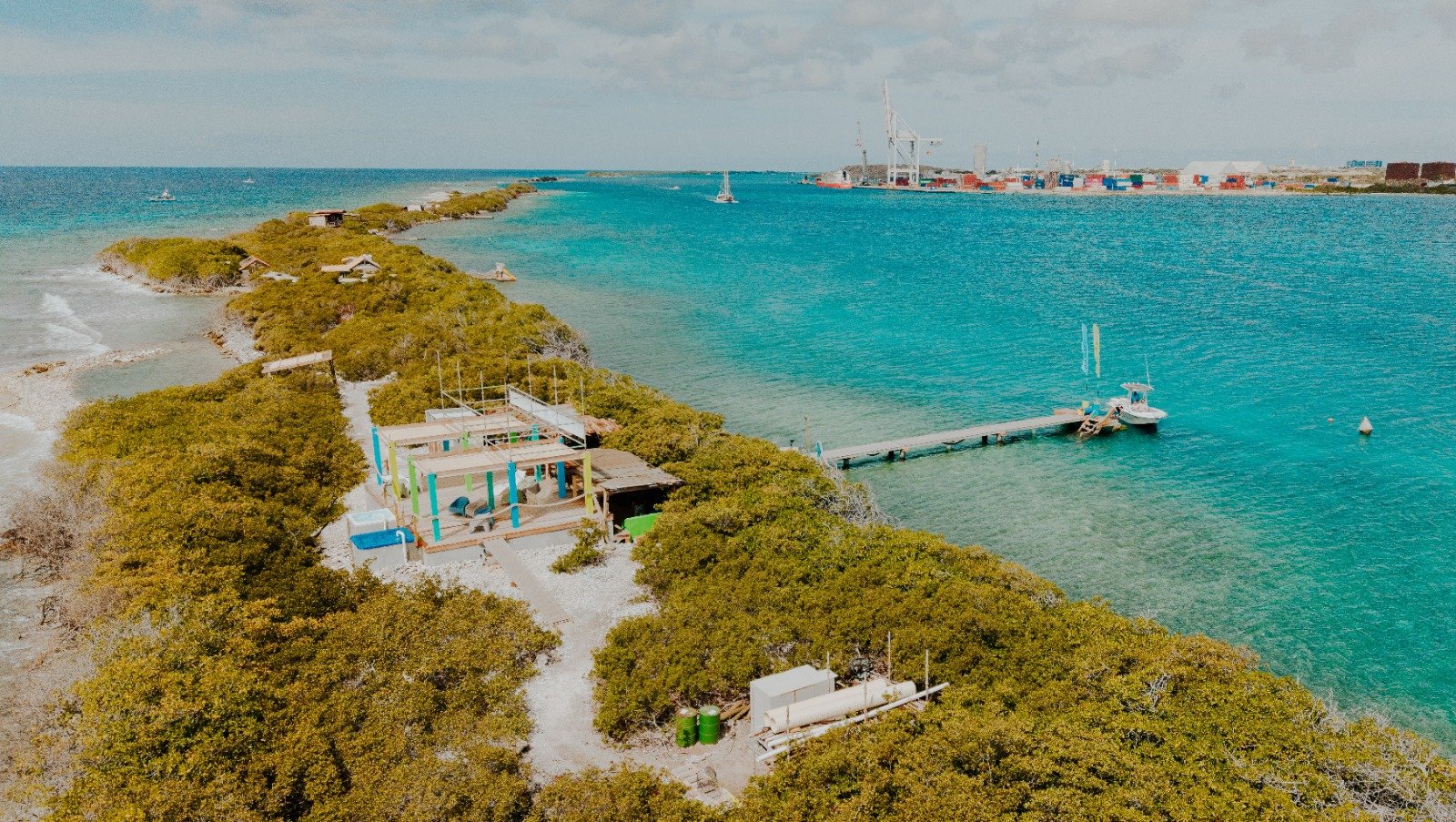
Malmok Beach sits at the northern end of the resort strip, along Palm Beach Road, at about 12.5882° N, 70.0661° W. Parking is along the road. The entry is a rocky limestone shelf with a ladder, so wear water shoes.
Malmok suits confident beginners and intermediate snorkelers. The reef runs from 2 to 10 meters, and visibility often reaches 25 to 30 meters in the dry season. It is the island’s best shore spot for spotted eagle rays, and nurse sharks often rest under coral ledges. Learn more in our spotted eagle ray and nurse shark guides.
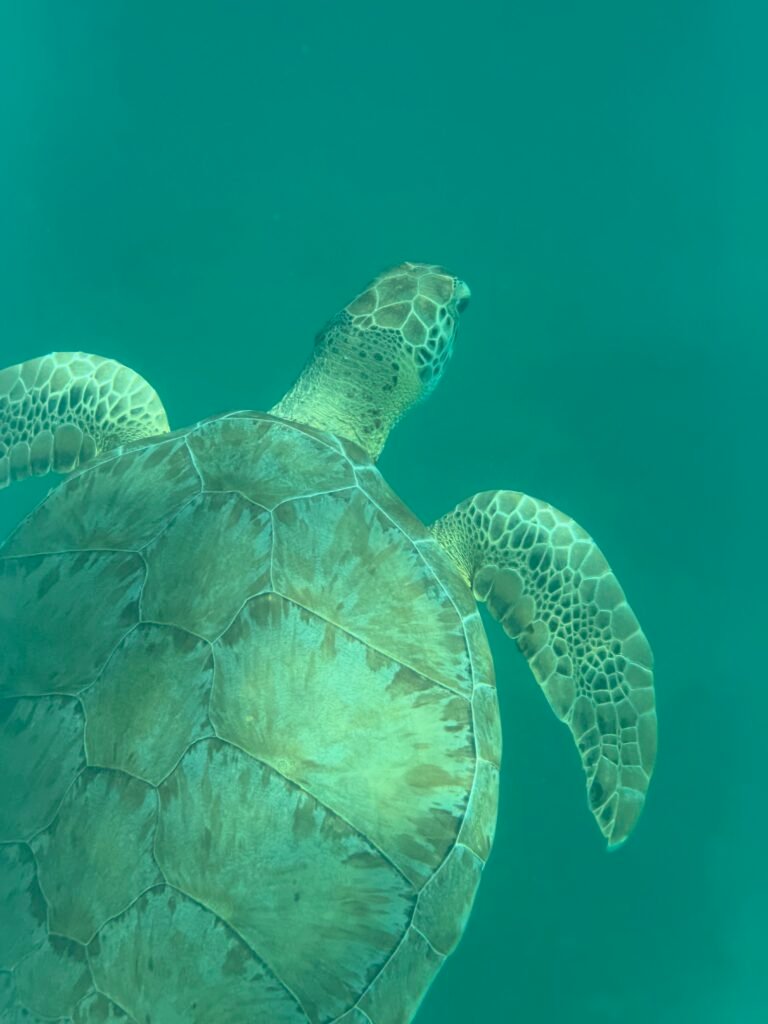
Malmok is also the meeting point for our direct guided turtle snorkel. A guide swims with the group, snorkel gear is included, and groups are capped at twelve. Turtles are wild, so sightings are likely but never guaranteed. See Aruba turtle snorkeling for details.
Only a fraction of it. The wreck lies offshore, so a snorkel sail is the way to see it properly. Read our Antilla shipwreck snorkeling guide.
Confident beginners do well here. The rocky entry and boat traffic make it less suited to young children.
Early morning, ideally 6 to 7 AM, when eagle rays are active and the water is calm.
Yes. Many snorkel sails stop at the reefs off Malmok, often together with the Antilla wreck.
Yes. This is the water the Antilla trips work, and the tour catamarans run through it all day — which is exactly why you want a surface marker buoy if you are swimming here. From the shore you get the reef and the eagle rays. The Antilla herself sits too deep and too far out to see properly without a boat.
Booked with us. FareHarbor trips open right here; the rest check out on OneHappyIsland.com.
Malmok · 2-hour guided snorkel · look for sea turtles · gear included
7 hours, private · $1,250 for 5, +$200 a guest to 12 · lunch, snorkel gear & Salty Water Jacuzzi
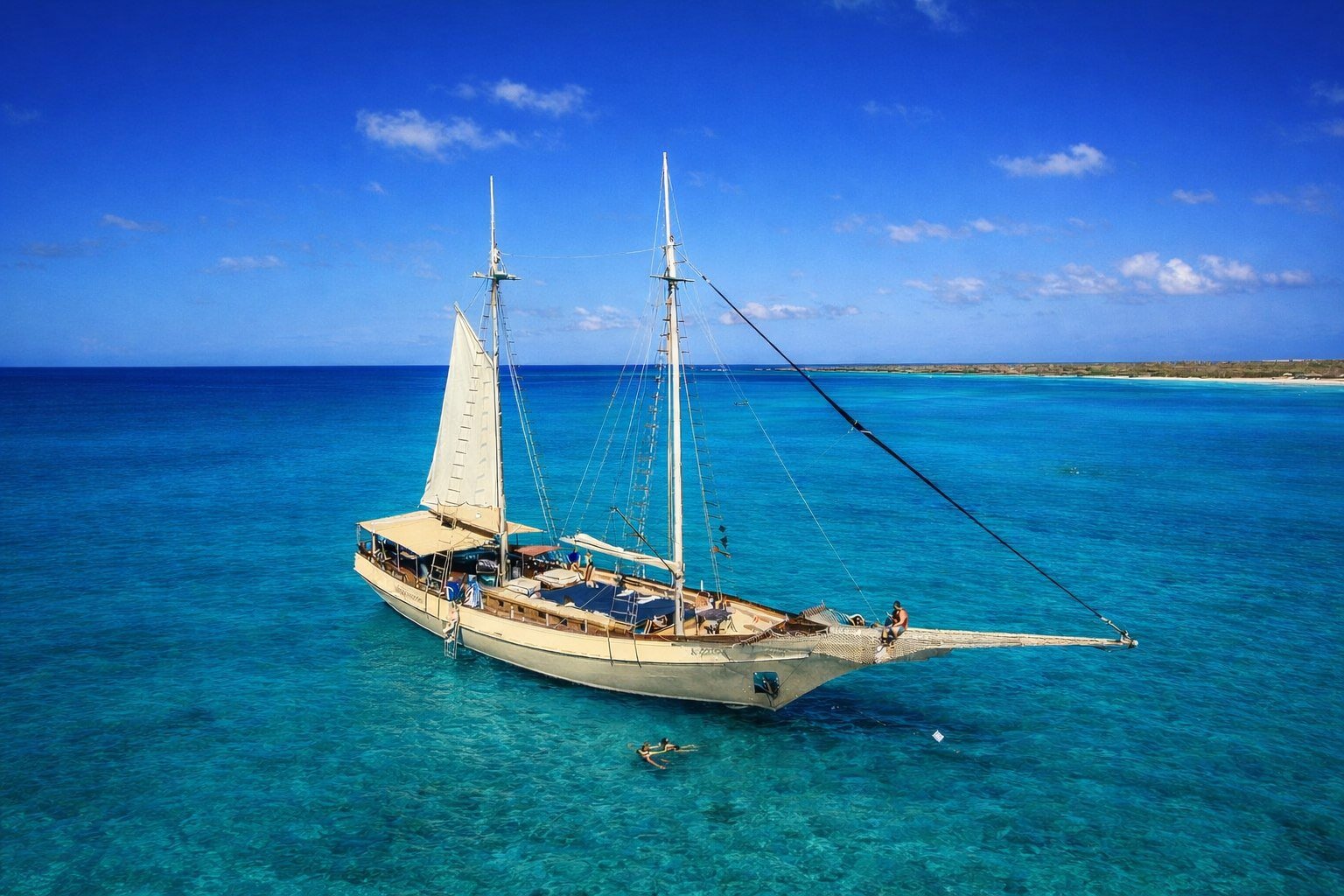
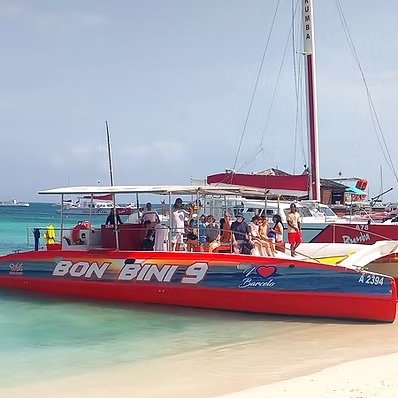
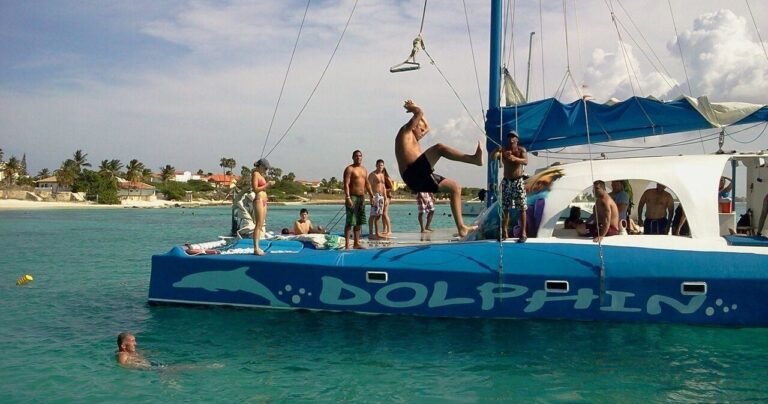
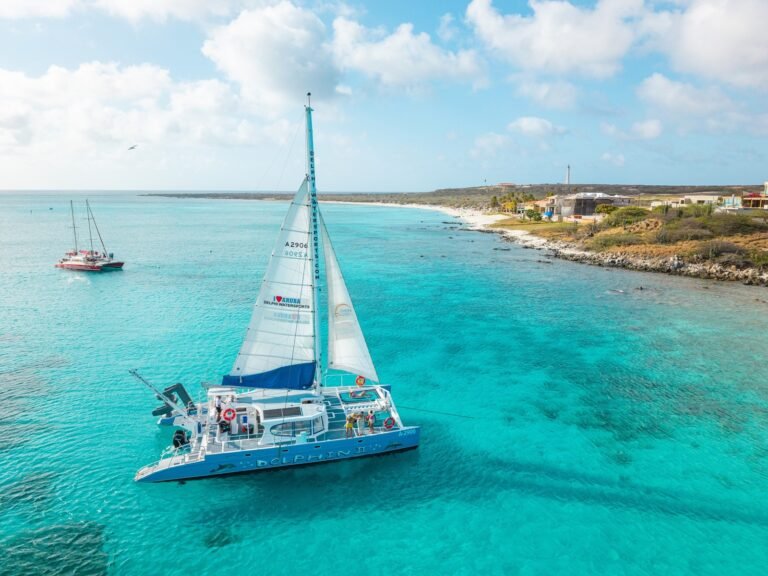
A 110-foot schooner out of Palm Beach: the calm 10:15 AM sail to Boca Catalina and Malmok, or the 3:15 PM party sail with the Antilla wreck, rope swing and open bar.
3 hours · wreck & reef · open bar, lunch
Three hours off Palm Beach — morning, afternoon or sunset at $70 an adult and $45 a child, or the whole boat to yourselves for $2,100.
3 to 8 hours · up to 42 · 2 snorkel stops, open bar
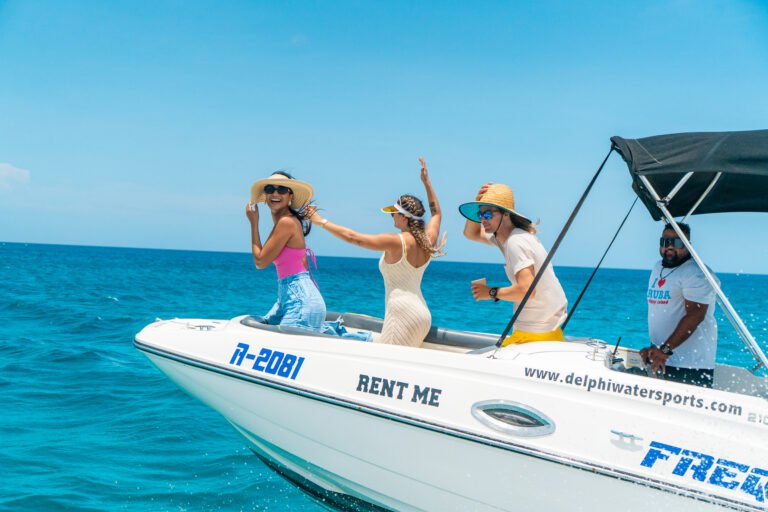
1 to 7 hours · up to 6 · snorkel from 2 hours
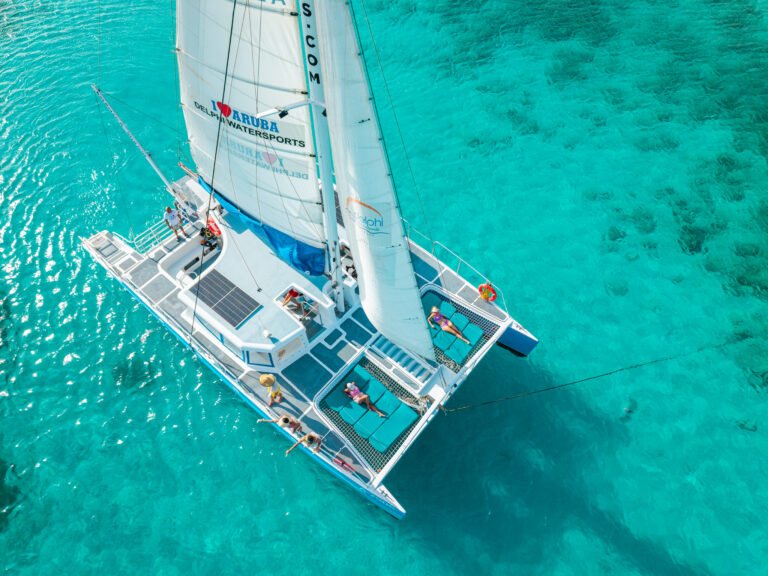
3 hours · whole catamaran · up to 60 people
These sail the leeward side, where this reef is. Stops vary by operator and by conditions on the day — the booking page lists them.
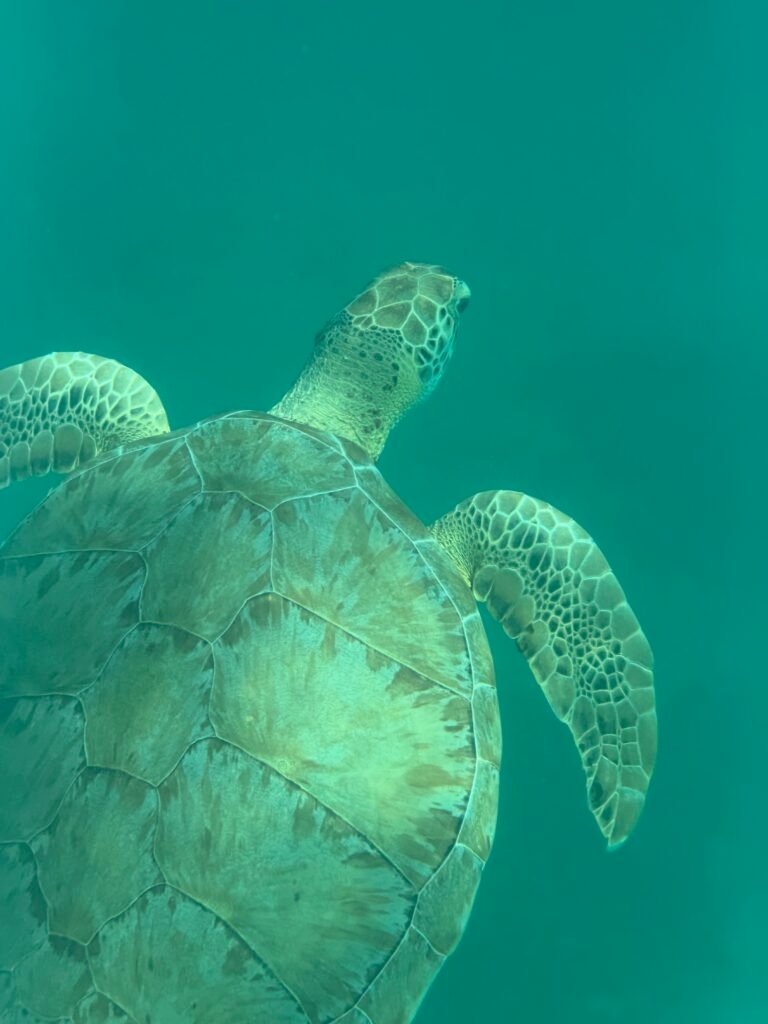 Direct
A two-hour guided snorkel at Malmok looking for sea turtles. Gear included.
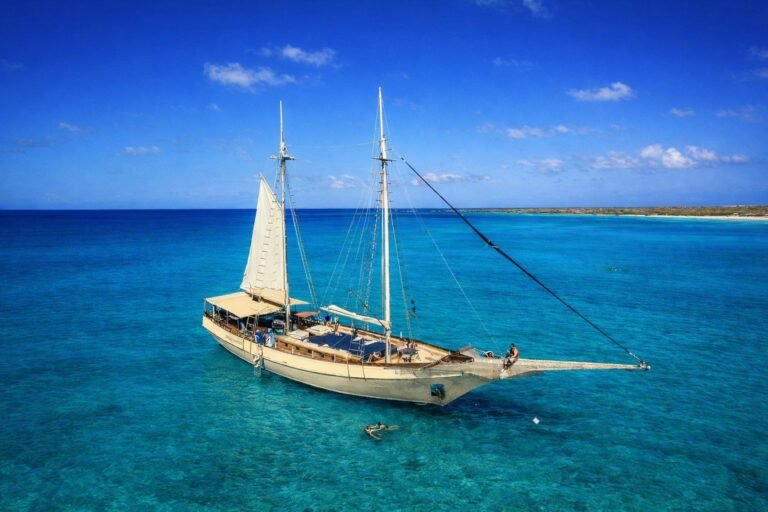 Direct
A 110-foot schooner: the calm morning sail or the afternoon party sail.
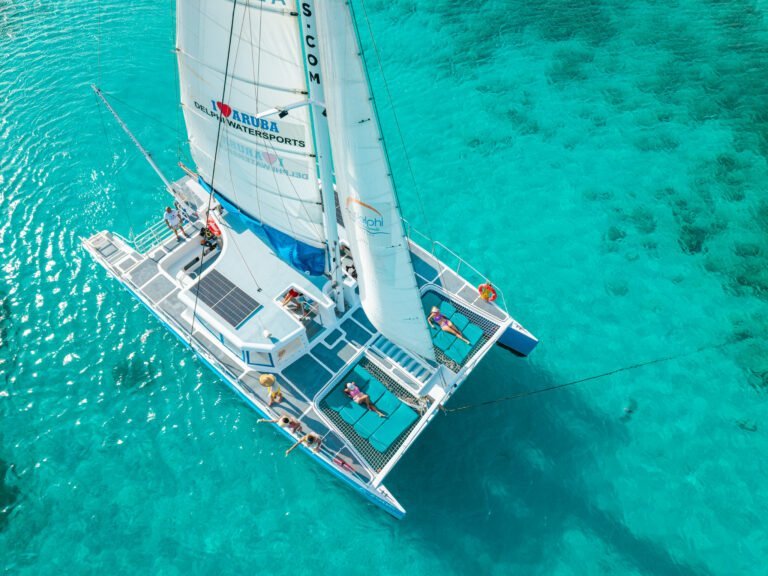 Direct
Three hours, a wreck and a reef, with lunch and an open bar.
 Direct
Three hours off Palm Beach: morning, afternoon or sunset, or the whole boat.
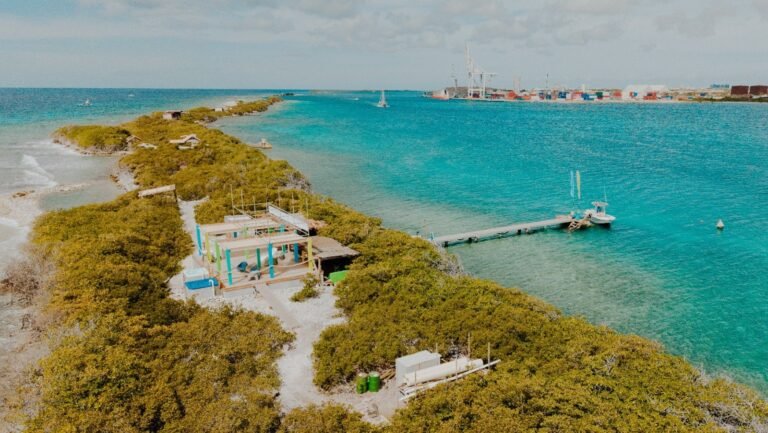 Direct
Seven private hours with lunch, snorkel gear and the Salty Water Jacuzzi.
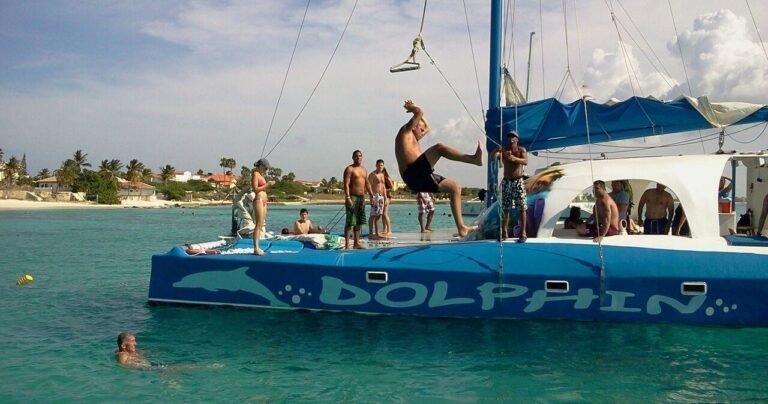 Direct
Your own catamaran for three to eight hours, two snorkel stops, open bar.
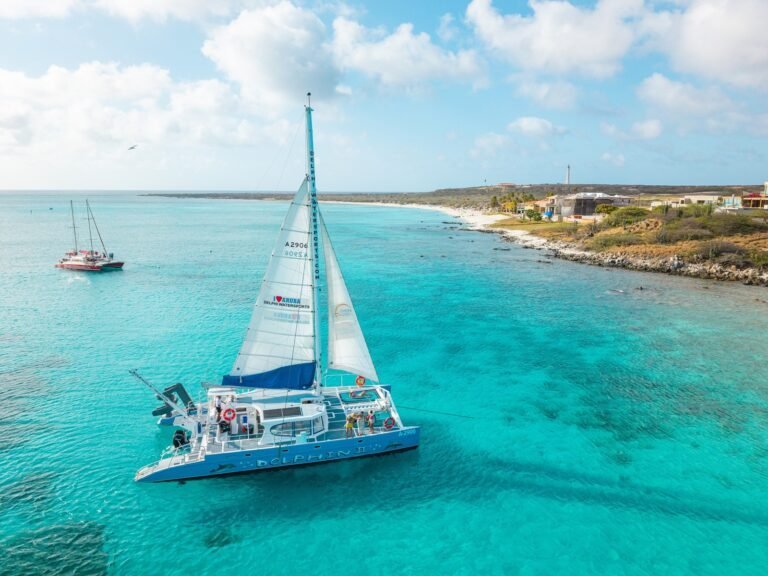 Direct
The whole Dolphin 2 catamaran for three hours. Room for up to 60.
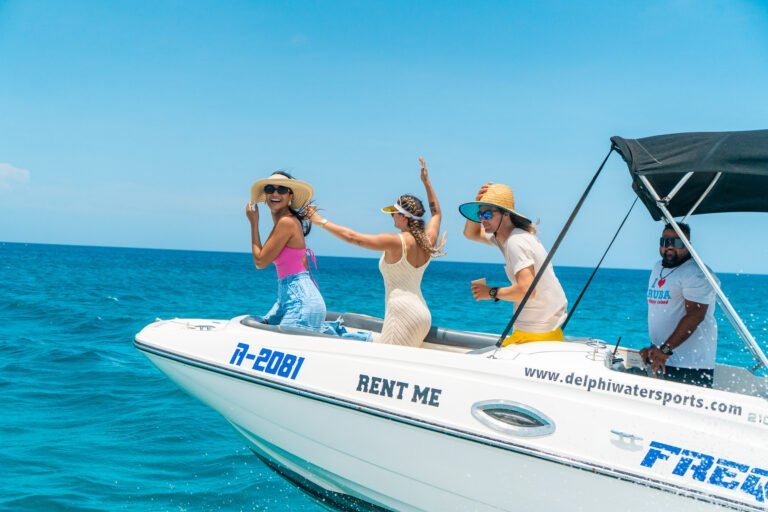 Direct
Your own boat and captain for one to seven hours. Up to 6 guests.
Different reef, different reason. Worth knowing before you commit a morning.
 Beginner-Intermediate
Tucked on Aruba's south coast, Mangel Halto has the healthiest coral on the island and the best odds of meeting an eagle…
Visibility 15-25m Best 7-10 AM Read the guide → Beginner
Metre-tall orange barrel sponges and hawksbill turtles feeding on them - a reef that looks like nowhere else in Aruba.
Visibility 10-20m Best Before 10 AM Read the guide → Intermediate
Three concrete steps into the best nurse shark snorkelling in Aruba - and no crowds, because there is no beach to sit…
Visibility 10-20m Best 7-10 AM Read the guide → Beginner
The island's best place to meet a sea turtle from shore - greens and hawksbills graze the seagrass here for twenty minutes…
Visibility 10-20m Best 7-10 AM Read the guide → Beginner
A shallow, current-free lagoon behind a natural coral barrier - the one spot on the island where you can genuinely relax while…
Visibility 5-15m Best 8-11 AM Read the guide →The tours worth paying for, somewhere to sleep nearby, and a car to reach the reefs that have no bus.
Direct
A two-hour guided snorkel at Malmok looking for sea turtles. Gear included.
Direct
A 110-foot schooner: the calm morning sail or the afternoon party sail.
Direct
Three hours, a wreck and a reef, with lunch and an open bar.
The reefs worth an early start are spread from Malmok to San Nicolas. Staying on the right side of the island saves you an hour of driving at dawn.
Search Aruba hotelsMangel Halto, Tres Trapi and Baby Beach have no practical bus route. A small automatic is enough for every site on this page.
Rent a car in ArubaRestaurants, beaches, itineraries and the rest of the trip, from our sister site.
Aruba travel guideEvery spot on the island with the honest version: where to park, where to get in, what you will actually see, and the mornings worth setting an alarm for.
 ArubaSnorkel